
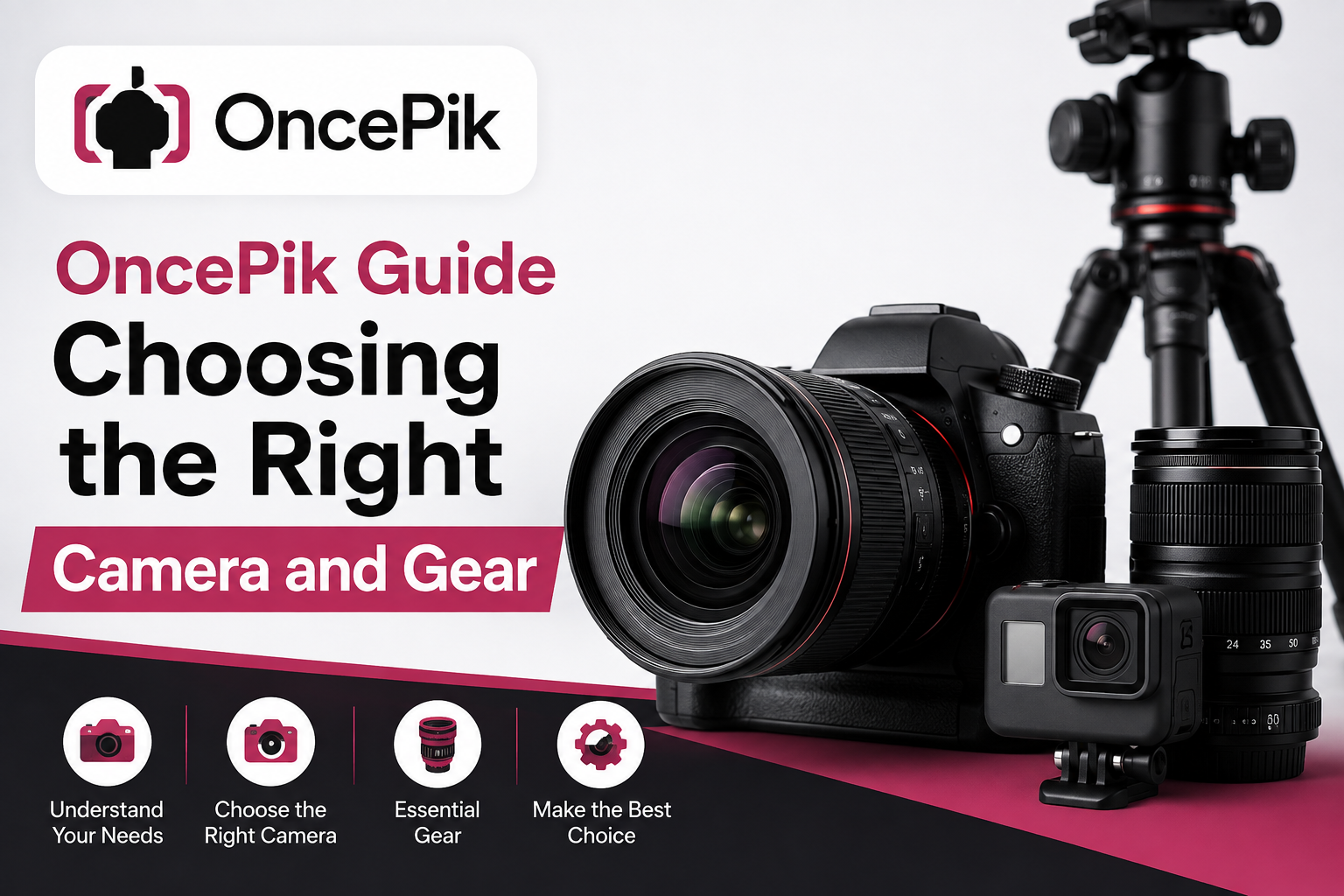
Picking a camera can feel hard. There are so many choices. Big cameras, small cameras, cheap ones, and pricey ones. This guide from OncePik will help you pick the right camera and gear without stress. We will use simple words and short tips. By the end, you will know what to look for and why it matters.
Why the Right Camera Matters
A camera is like a tool. The right tool makes your work easier. The wrong tool makes it harder. If you pick a camera that fits your needs, you will enjoy taking photos more. You will also get better results with less effort.
Many people buy a camera because it looks nice or costs less. But looks and price are not the only things that matter. You need a camera that fits how you plan to use it.
Think About Your Goals First
Before you buy anything, ask yourself a few questions:
- Do you want to shoot family photos?
- Do you want to try travel photography?
- Do you plan to make videos?
- Do you want to sell your photos one day?
Your answers will guide your choice. A parent taking birthday photos does not need the same gear as a nature photographer chasing wildlife shots.
Types of Cameras to Know
There are three main types of cameras most people choose from. Each one has its own strengths.
Smartphone Cameras
Most phones today take great photos. They are easy to carry and simple to use. If you are just starting out, your phone camera might be enough. It is also the cheapest option since you likely already own one.
Point-and-Shoot Cameras
These cameras are small and simple. You do not need to learn much to use them. They are great for people who want better photos than a phone but do not want to deal with settings.
DSLR and Mirrorless Cameras
These are bigger cameras with more power. You can change lenses and control settings like light and focus. They give you the best image quality. But they also take more time to learn. This is where choosing the right camera body becomes important, since the body affects how the camera feels in your hands and how fast it works.
What to Look for in a Camera
When you shop for a camera, do not just look at the price tag. Look at these things too.
Megapixels
Megapixels tell you how much detail a photo can hold. More megapixels can mean sharper images, especially if you plan to print large photos. But you do not always need the highest number. Many great photos come from cameras with modest megapixel counts.
Sensor Size
The sensor is the part inside the camera that captures light. Bigger sensors usually take better photos in low light. This matters a lot if you shoot indoors or at night.
Autofocus Speed
If you take photos of kids, pets, or sports, autofocus speed matters. A camera with fast autofocus will catch quick moments better. A slow camera might miss the shot.
Battery Life
Nobody wants a camera that dies fast. Check how long the battery lasts before you buy. This is especially important for travel days when you may not have a place to charge.
Choosing the Right Lens
Many new photographers forget that the lens matters as much as the camera. A good lens can make a simple camera take amazing photos. A bad lens can make an expensive camera look weak.
Kit Lens
This is the lens that comes with your camera. It works fine for everyday photos. It is a good starting point for beginners.
Prime Lens
A prime lens has one fixed zoom level. It cannot zoom in or out. But it often takes sharper photos and works well in low light. Many photographers love using a fixed focal length lens for portraits because it creates a soft, blurry background.
Zoom Lens
A zoom lens lets you get closer to your subject without moving. This is helpful for wildlife, sports, or travel photos where you cannot walk closer.
Other Gear You Might Need
A camera and lens are not the only tools you need. Here are a few more items that help you take better photos.
Tripod
A tripod holds your camera still. It helps you avoid blurry photos, especially in low light or when shooting long videos.
Memory Cards
You need somewhere to store your photos. Buy memory cards with enough space and fast writing speed. This helps your camera save photos quickly without lag.
Camera Bag
A good bag protects your gear from bumps, dust, and rain. It also makes it easier to carry everything in one place.
Extra Batteries
Batteries run out faster than you think, especially in cold weather. Carrying a spare battery can save your day.
Budget Tips from OncePik
You do not need to spend a lot of money to take great photos. Many photographers create amazing work with simple gear. Here are a few tips to save money without losing quality.
- Buy used gear from trusted sellers.
- Start with a kit lens before buying extra lenses.
- Rent expensive gear before buying it.
- Focus on learning your camera well instead of buying new tools often.
Smart spending matters more than expensive spending. Many skilled photographers say their basic gear starter kit helped them learn more than fancy equipment ever did.
Learning Your Gear
Buying the right camera is only step one. The next step is learning how to use it. Read the manual. Watch simple tutorials. Practice often. The more you use your camera, the more natural it feels.
Do not worry about mistakes. Every photographer starts as a beginner. Even professionals took blurry, dark, or shaky photos when they were new. Practice is what builds skill, not just gear.
Final Thoughts
Choosing the right camera and gear does not need to be confusing. Think about your goals first. Then pick a camera that fits your needs and budget. Add a few helpful tools like a tripod or extra batteries. Most importantly, take time to learn your gear well.
With patience and practice, anyone can take great photos. OncePik hopes this guide helps you feel confident in your next camera choice.
FAQs
1. What camera is best for beginners?
A point-and-shoot camera or smartphone is a great start. They are simple and easy to use.
2. Do I need an expensive lens?
No. A kit lens works fine for most beginners. You can upgrade later if needed.
3. How many megapixels do I need?
Most people do well with 12 to 24 megapixels. More is only needed for large prints.
4. Is a tripod really necessary?
It helps a lot, especially for night photos or videos. It is not required but very useful.
5. Can I learn photography without a fancy camera?
Yes. Many skills come from practice, not gear. A simple camera can teach you a lot.