
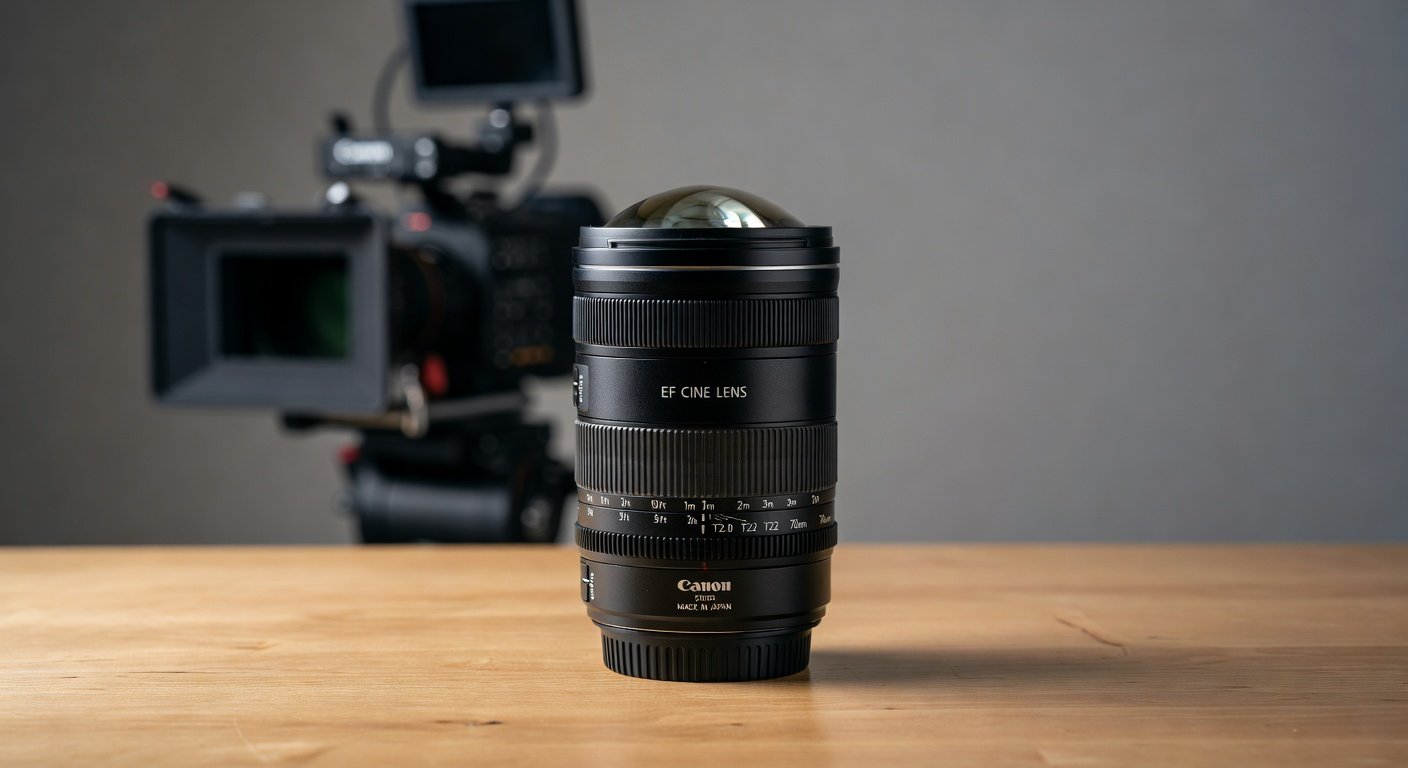
If your footage looks flat, inconsistent, or “cheap,” the problem is not your camera. It is your lens.
Most creators try to fix cinematic look in editing, LUTs, or filters, but they ignore the real foundation: glass. That is where ef cine lens systems change everything.
An EF cine lens gives you controlled focus, consistent exposure, and true cinematic rendering that normal photo lenses cannot deliver. If you are shooting films, commercials, YouTube content, or documentaries, switching to cine glass is not optional anymore, it is a requirement for professional output.
And here is the hard truth. If you are still using photo lenses for serious video work, you are limiting your results no matter how expensive your camera is.
What is EF Cine Lens?
An ef cine lens is a cinema-grade lens designed for Canon EF mount systems and adapted cinema workflows.
In simple words:
It is a lens built specifically for video and filmmaking, not photography.
Unlike regular lenses, cine lenses are engineered for:
- Smooth manual focus control
- Consistent T-stop exposure
- Minimal focus breathing
- Uniform gear placement for rigs and follow focus systems
Think of it as the difference between a “car for commuting” and a “car built for racing.” Both move, but one is designed for precision.
Beginner-friendly explanation
If you are new, here is the simplest way to understand:
- Photo lens = sharp images for still pictures
- EF cine lens = smooth, controlled storytelling for video
That is it.
Why EF Cine Lens Matters
Most creators face the same problems:
1. Inconsistent exposure between shots
Photo lenses use f-stops, not T-stops. That means exposure shifts between lenses.
2. Focus breathing ruins cinematic shots
When you rack focus, your frame “zooms slightly.” It looks amateur.
3. Poor manual focus control
Photography lenses are not designed for precise follow focus systems.
4. Color inconsistency across lenses
Matching shots becomes painful in post-production.
Real-world use cases
- Indie filmmakers shooting short films
- YouTubers upgrading to cinematic storytelling
- Commercial videographers shooting brand ads
- Film students building professional reels
If you want a real cinematic look, you cannot avoid cine glass.
Even your grading workflow using tools like cinematic lightroom presets will perform better only when your base footage is clean.
Key Features of EF Cine Lens
Here is what makes ef cine lens systems different:
- True T-stop calibration for exposure accuracy
- Manual focus with long throw for precision control
- Uniform gear placement for rigs and follow focus
- Minimal to zero focus breathing
- Consistent color across lens sets
- Durable cinema-grade build quality
- Designed for gimbals, rigs, and shoulder setups
- Smooth iris control without stepping
Benefits
- Cleaner cinematic transitions
- Professional focus pulls
- Easier editing and color grading
- Faster production workflow
- Consistency across multi-camera shoots
Types of EF Cine Lens
1. Cine Prime Lenses
Fixed focal length lenses.
Used for:
- Narrative films
- Interviews
- Controlled studio shoots
Strong advantage:
- Highest image quality
- Best depth control
2. Cine Zoom Lenses
Variable focal length lenses.
Used for:
- Weddings
- Documentaries
- Run-and-gun shooting
Strong advantage:
- Flexibility without changing lenses
3. EF Cinema Zoom Lenses
Professional broadcast and film production.
Used for:
- Commercial shoots
- TV production
- High-end filmmaking
4. Budget Cine Lenses
Entry-level cine glass.
Used for:
- YouTube creators
- Film students
- Indie filmmakers
Brands often include Rokinon, Meike, and 7artisans.
Comparison Table
| Feature | EF Cine Lens | Autofocus Photo Lens | Budget Cine Lens |
|---|---|---|---|
| Focus Type | Manual precision | Autofocus | Manual |
| Exposure | T-stop accurate | f-stop variable | T-stop semi-accurate |
| Focus Breathing | Minimal | High | Medium |
| Build Quality | Cinema grade | Consumer grade | Mid-level |
| Price | High | Low to mid | Low |
| Use Case | Films, ads | Photography | YouTube, indie film |
If you want consistency and control, EF cine lens wins easily.
Pros and Cons of EF Cine Lens
| Pros | Cons |
|---|---|
| Cinematic image quality | Expensive |
| Professional focus control | No autofocus |
| Consistent exposure | Heavier build |
| Better rig compatibility | Learning curve |
| Industry standard workflow | Not beginner-friendly |
Let’s be honest.
If you are casual shooting family videos, this is overkill. But if you want professional results, there is no shortcut.
How to Choose the Right EF Cine Lens
Do not buy based on hype. Buy based on workflow.
Step 1: Define your shooting style
- Narrative film → Cine primes
- Weddings → Cine zoom
- YouTube → Budget cine lenses
Step 2: Check your camera mount
EF mount compatibility is critical:
- Canon cinema cameras
- Sony FX series with EF adapter
- Blackmagic Pocket Cinema Camera
Step 3: Decide budget per lens
- Entry level: $300–$1,000
- Mid level: $1,000–$5,000
- Professional: $5,000+
Step 4: Check focus system compatibility
If you use follow focus rigs, ensure gear consistency.
Step 5: Future upgrade path
Do not buy lenses you will outgrow in 3 months.
Best Use Cases for EF Cine Lens
🎬 Indie Filmmakers
- Short films
- Feature films
- Documentary storytelling
📺 Commercial Videographers
- Brand ads
- Corporate videos
- Product films
🎥 YouTube Creators
- Cinematic vlogs
- Travel filmmaking
- Story-driven content
🎓 Film Students
- Learning professional workflows
- Building reels for industry entry
📡 Wedding Videographers
- Low-light ceremonies
- Cinematic wedding films
- Multi-camera setups
EF Cine Lens US
🎬 Indie Filmmakers
They care about storytelling, not gear hype. They want consistent lenses that pass professional screening standards.
- Budget: $800–$6,000 per lens
- Cameras: Canon C70, RED Komodo, BMPCC 6K
- Priority: T-stop accuracy, low breathing
📺 Commercial Videographers
High-budget clients and strict deadlines.
- Budget: $2,000–$15,000 per lens
- Cameras: Canon C300 MKIII, C500 MKII
- Priority: Color matching and reliability
🎥 YouTube Creators
Fast-growing segment in the US.
- Budget: $300–$1,500 per lens
- Cameras: Sony FX30, Canon R series
- Priority: affordability and cinematic look
Secondary Segments
🎓 Film Schools
They influence the next generation of filmmakers.
📡 Wedding Videographers
High-volume shooters needing flexibility and low-light performance.
Why Choose Oncepik
Most brands sell lenses. Few understand workflow.
Oncepik focuses on real production needs:
- Lens ecosystem planning
- Compatibility with cinema lens sony e mount systems
- Integration with cine e mount lenses
- Support for hybrid workflows using rf cinema lenses and l mount cinema lenses
- Practical guidance for creators, not just specs
You are not just buying glass. You are building a production system.
Common Mistakes to Avoid
1. Buying based on price only
Cheap cine lenses often ruin consistency.
2. Ignoring mount compatibility
EF, RF, E-mount, L-mount confusion causes wasted money.
3. Mixing photo and cine lenses randomly
Your footage will never match.
4. Over-investing too early
Do not buy $10K lenses if you are still learning exposure control.
5. Ignoring workflow tools
Even best lenses fail without proper grading tools like cinematic lightroom presets.
Conclusion
An ef cine lens is not just gear. It is a shift in how you think about filmmaking.
If your goal is cinematic storytelling, you need:
- Control over focus
- Consistent exposure
- Professional workflow compatibility
- Reliable lens systems
Everything else is secondary.
Start small if needed, but do not stay stuck in photo-lens thinking if you want real cinematic results.
The gap between amateur and professional is not camera bodies anymore. It is lens discipline.
FAQs
1. What is EF cine lens used for?
It is used for filmmaking, commercials, and cinematic video production where manual control and consistency are required.
2. Is EF cine lens better than photo lens?
Yes, for video work. Photo lenses are not designed for cinematic focus control or consistency.
3. Can I use EF cine lens on Sony cameras?
Yes, using EF to E-mount adapters.
4. What is the difference between cine lens and cinema lens?
Both refer to the same category. Cinema lens usually implies higher-end broadcast systems.
5. Are EF cine lenses good for beginners?
Not really. They require manual control skills. Beginners should start simple.
6. What is the best EF cine lens setup?
A mixed set of cine primes + one cine zoom lens is the most practical setup.
7. Do cine lenses improve video quality?
Yes, but more importantly they improve consistency, which is what makes footage look cinematic.