
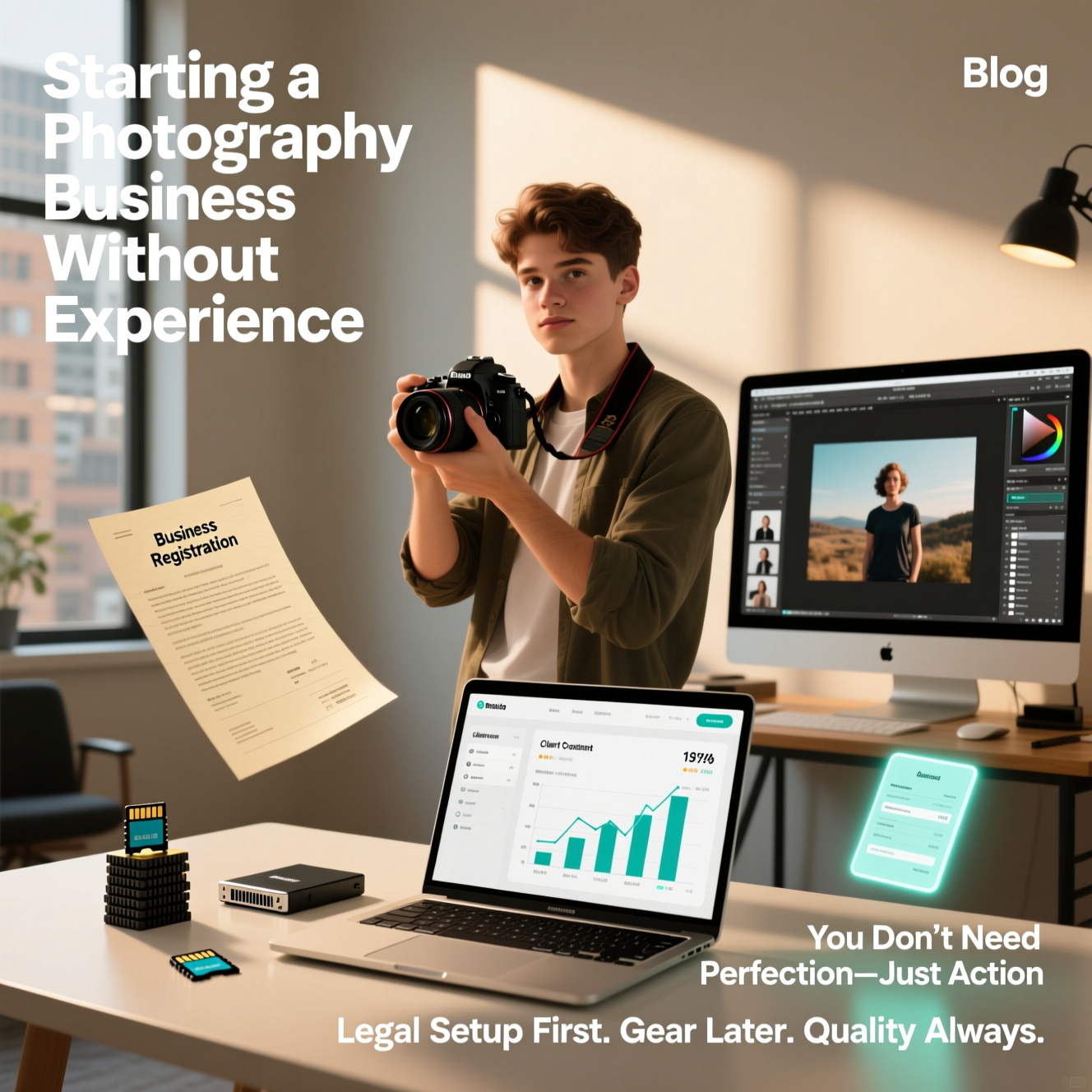
Starting a photography business without experience is not impossible. But it is also not easy, fast, or glamorous. Most beginners fail because they skip legal setup, overbuy gear, and underprice their work.
This guide shows you exactly what to do first, what to delay, and what actually matters when starting from zero.
Legal. Business Setup
Legal Step-By-Step Checklist To Start a Photography Business
Do this before taking paid clients. Skipping these steps creates tax issues, payment problems, and legal risk.
1. Choose Your Business Name
Your business name does not need to be clever. It needs to be:
- Easy to spell
- Easy to remember
- Available as a domain and social handle
Avoid limiting names like “Wedding Photography” if you might expand later.
Bad example: John Wedding Photos
Better example: John Smith Photography
Check availability through your local business registry and domain providers.
2. Register Your Business
Register your business based on your country or state requirements. Most beginners choose:
- Sole proprietorship or
- Single-member LLC
An LLC offers better liability protection. If you plan to charge clients, you should not operate unregistered.
Do not delay this step. Clients trust registered businesses more.
3. Set Up a Business Bank Account
Never mix personal and business money.
You need a separate bank account to:
- Track income and expenses
- Simplify taxes
- Look professional to clients
Open the account after registration. Use it only for photography income and costs.
Creative. Practical Setup
The Fun Stuff
This is where beginners rush. Do not. Buy only what supports paid work.
Software and Supplies Needed For Your Photography Business
These are non-negotiable basics.
1. A Computer
You do not need a high-end machine. You do need:
- Fast storage (SSD)
- Minimum 16GB RAM
- Reliable performance for editing
Slow computers waste hours and kill motivation.
2. Editing Software
You must learn editing. Shooting alone is not enough.
Common choices:
- Adobe Lightroom
- Adobe Photoshop
Free tools exist, but industry-standard software saves time and delivers better results.
3. Memory Cards and Case
Buy multiple memory cards instead of one large card. This reduces risk.
Always store cards in a protective case. Lost cards equal lost clients.
4. Online Gallery Delivery
Clients expect digital delivery.
Use platforms that allow:
- Private galleries
- Downloads
- Print options
Emailing files is unprofessional.
5. Form of Contact
Clients need a way to reach you.
Minimum requirements:
- Email address
- Contact form or phone number
If clients cannot contact you easily, they will move on.
Additional Tools (Optional)
Software and Supplies That Are Nice To Have, But Not Necessary
These help you scale but are not required on day one.
1. Hard Drives
External hard drives protect your work.
Use them for backups only. Never store files in one location.
2. Backblaze
Cloud backup protects against theft, failure, or accidents.
If client photos matter to you, backups are not optional long-term.
3. ShootProof
ShootProof helps with:
- Client galleries
- Contracts
- Invoicing
It saves time once you have regular bookings.
4. Website
A website increases trust, not bookings at the start.
You can begin with social media, then build a site when income is consistent.
5. Logo and Branding Colors
Branding matters less than quality.
Avoid paying designers early. Simple text logos are enough at the start.
Gear. Equipment
Photography Gear You Need To Buy
Gear does not make you professional. Skill and consistency do.
Where To Buy Affordable Cameras and Lenses
Buy used when possible. Many professionals upgrade yearly.
Trusted options include:
- Camera stores
- Certified used marketplaces
Avoid unknown sellers.
Cameras
You do not need the latest model.
Look for:
- Good low-light performance
- Reliable autofocus
- Interchangeable lenses
Mirrorless or DSLR both work.
Lenses
Lenses matter more than camera bodies.
Start with:
- One prime lens
- One versatile zoom
Avoid buying full kits early.
Nikon
Nikon Cameras I Recommend For Starting Your Photo Biz
Entry-level Nikon cameras offer strong image quality and durability.
Focus on usability, not features you will not use.
Best Professional Camera Lenses I Recommend
Choose lenses that match your niche.
Portraits, events, and products require different focal lengths.
Buy slowly. Master one lens before buying another.
Business Tips
Pricing and Portfolio Tips When Starting a New Photography Business
This is where most beginners fail.
1. Pricing
Do not underprice to attract clients. Cheap prices attract difficult clients.
Calculate pricing based on:
- Time
- Editing hours
- Equipment cost
- Software subscriptions
Charge fairly. Raise prices as skill improves.
2. Portfolio
You do not need hundreds of photos.
You need:
- 10 to 20 strong images
- Consistent style
- Clear niche
Practice with friends or personal projects. Never use work you are not proud of.
Final Reality Check
You will not feel ready. Start anyway.
You will make mistakes. Fix them fast.
You do not need perfection. You need action.
Start legally. Buy less gear. Learn faster. Charge fairly. more blogs on oncepik